
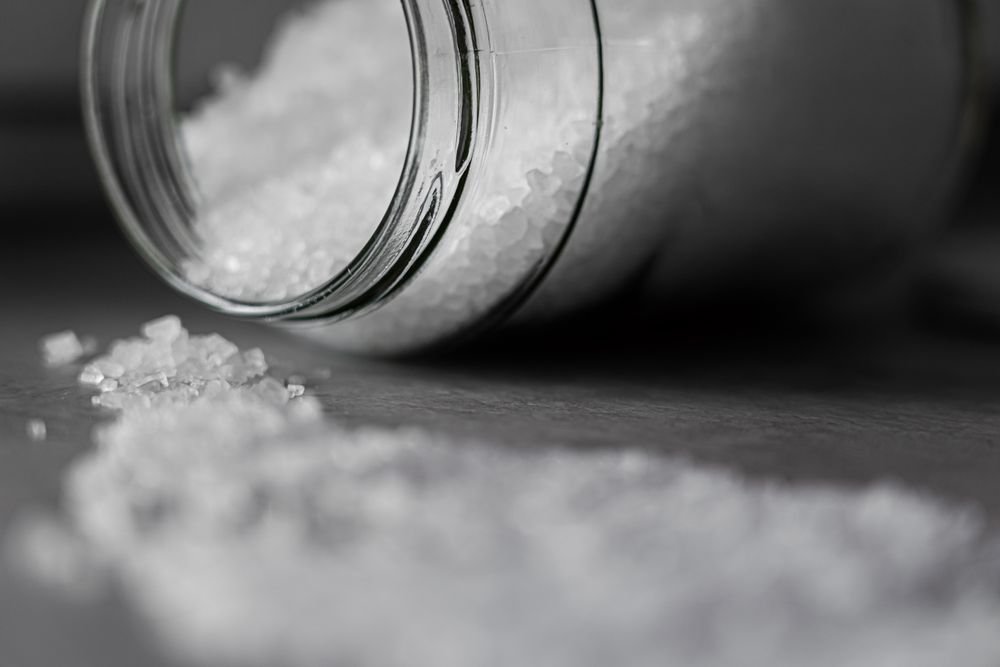

Home cooks across the U.S. are walking down grocery aisles and finding empty shelves where Morton and Diamond Crystal kosher salt used to sit. At the same time, headlines about a 2026 salt shortage are spreading fast. It’s easy to assume the two things are connected — but the reality is more complicated than that.
This article breaks down whether a true kosher salt shortage exists, why road salt supply problems are muddying the picture, what’s actually causing brand-specific gaps in stores, and what you can do if you can’t find your usual salt.
Kosher Salt Is Not the Same as Road Salt — and That Distinction Matters
Before anything else, it helps to understand what you’re actually talking about when you say “salt shortage.” There are different types of salt, and they don’t share the same supply chain.
Kosher salt is a coarse-grain culinary salt used for cooking and meat preparation. Despite the name, it isn’t necessarily blessed or ceremonially prepared — the term refers to its use in the koshering process. It’s a kitchen product, full stop.
Road salt — also called rock salt or halite — is a completely different product. It’s mined and used almost entirely for de-icing roads in winter. It has its own suppliers, distribution networks, and customer base, which is mostly municipalities and transportation departments.
When you see a news headline about a “salt shortage,” there’s a good chance it’s about road salt. But those headlines are creating real confusion among home cooks who start wondering if their Diamond Crystal is about to disappear too. According to a 2026 analysis by Business Focus Magazine, kosher salt supply is actually on stable ground — the shortage narrative around cooking salt is largely a product of that confusion.
Road Salt Shortages Are Real — Here Is What Is Actually Happening
The road salt situation is a genuine, documented problem. Cleveland and Northeast Ohio experienced a rock salt shortage this past winter, driven by delayed shipments from Cargill, the state-contracted supplier for Cuyahoga County. The city had roughly 10,000 tons of salt left and had to make hard choices — prioritizing main roads, hills, dangerous intersections, and routes near hospitals and schools, while leaving residential streets less treated.
That’s not a small-scale issue. When people in Cleveland see icy side streets and hear “salt shortage” on the local news, it sticks. And that perception spreads.
The underlying problem is structural, not just a one-winter fluke. According to a detailed 2026 analysis called “The Halite Paradox,” North American road salt production capacity has stayed nearly flat since the 1990s. Meanwhile, demand for de-icing salt has grown steadily. To fill the gap, the U.S. now imports 8 to 10 million tonnes of road salt every year, primarily from Chile, Egypt, and Morocco.
Even when the imported salt arrives at ports, moving it is a challenge. There’s a shortage of CDL drivers willing to haul corrosive bulk loads at municipal contract rates, which means tons of salt have been sitting at ports in Newark and Baltimore while roads go untreated. In Canada, a supplier notice from March 2026 explicitly flagged “excessive salt demand and limited supply” and updated pricing for rock salt and sand/salt mixes.
None of this directly affects the salt in your kitchen — but it absolutely affects public perception.
Why Morton and Diamond Crystal Are Hard to Find in Stores Right Now
Even setting aside the road salt confusion, there are real reasons why some consumers are struggling to find their preferred kosher salt brand.
On Reddit’s r/Cooking community, multiple users have reported that Morton kosher salt has been “extremely hard” to find, with only small shaker bottles available in some stores. Diamond Crystal has also been spotty in certain regions. One commenter mentioned a strike at a Morton supplier over the summer that caused backlogs — but that claim is anecdotal and unverified, so take it with appropriate skepticism.
On Instagram, a mid-2026 reel asking “Is it me, or is there a shortage of Diamond Crystal kosher salt?” attracted significant attention, showing that this isn’t just a Reddit-specific concern. The perception is active and widespread.
One Facebook post from a commercial landscape and building supply company claimed Morton is prioritizing government contracts over retail distribution. That’s consistent with how things work during tight supply periods — large institutional buyers often get first access — but it shouldn’t be taken as confirmed corporate policy without direct confirmation from Morton.
There are also quieter structural reasons for the shelf gaps. Many large retailers run lean, just-in-time inventory systems. When there’s any disruption upstream — a delayed shipment, a temporary production slowdown, a change in which SKUs a distributor prioritizes — shelves empty out quickly, even if the overall supply further up the chain is fine. Some stores have also quietly reduced shelf space for name-brand kosher salt or shifted toward private-label coarse salt to protect their margins.
Add in demand spikes from viral recipes, cooking trends, or people stocking up before winter storms, and you get localized shortages that feel significant even when supply isn’t in crisis at the national level.
Is There an Actual Kosher Salt Shortage, or Is It Mostly Perception?
Here’s the direct answer: there is no systemic, nationwide shortage of kosher salt. The honest picture is more nuanced.
Industry analysis from 2026 specifically examined this question and concluded that kosher salt production is robust, reserves are strong, and there is no evidence of widespread hoarding, supply chain collapse, or looming long-term shortage. The Business Focus Magazine piece on this topic states clearly that kosher salt is in a strong position for the next decade.
What does exist is a patchwork of real but localized issues. A brand-specific delay here, a retailer pulling back on shelf space there, some storm-driven demand spikes in certain markets, and a wave of general anxiety driven by road salt headlines. Put all of that together and you get consumers who genuinely can’t find Morton in their local store — even though that’s a distribution and inventory problem, not a production crisis.
The distinction matters if you’re trying to decide whether to panic-buy or simply look for alternatives.
What You Should Actually Do If You Can’t Find Kosher Salt
If your usual brand isn’t on the shelf, here are practical steps that actually work.
Try a different store or package size
Shortages are often store-specific or SKU-specific. If a 3-pound box of Morton is gone, a different size might be in stock. Warehouse stores like Costco or restaurant supply shops sometimes carry large-format bags that haven’t moved the same way retail boxes have.
Order online
Online availability often doesn’t track with local shelf availability. If you need a specific brand for a specific reason, checking Amazon or a specialty grocer’s website is worth a few minutes.
Switch brands — with a key adjustment
Morton and Diamond Crystal are not interchangeable by volume. Diamond Crystal has larger, lighter flakes. Morton is denser and saltier by the spoonful. If you switch brands mid-recipe, you’ll need to adjust. A general rule: if switching from Diamond Crystal to Morton, use about 25% less by volume. If your usual brand is unavailable, a coarse sea salt can also work — just pay attention to the grain size and taste as you go.
Don’t stockpile unnecessarily
Industry experts are not recommending hoarding. The supply picture for culinary salt is stable overall. Buying more than you need doesn’t help — it actually contributes to the shelf gaps that create the appearance of a shortage in the first place.
The Bottom Line
Road salt shortages in places like Cleveland are real and documented, with structural causes that won’t fix themselves overnight. But kosher salt, the kind you cook with, operates on a different supply chain and is not in crisis at the production level.
If you’re having trouble finding Morton or Diamond Crystal on your local shelf, that’s frustrating — but it’s more likely a distribution hiccup, a retailer inventory decision, or a localized demand spike than a signal of a long-term problem. For small businesses, restaurants, and home cooks trying to plan ahead, the practical move is to stay flexible on brands, adjust measurements when you substitute, and avoid over-reading the road salt headlines as a warning about your pantry.
For broader business and supply chain news that affects everyday decisions, BusinessSling covers these developments in plain language without the noise.
The salt will be back on the shelf. It just may not be your exact brand, in your exact size, at your exact store, this week.
Read Also: