
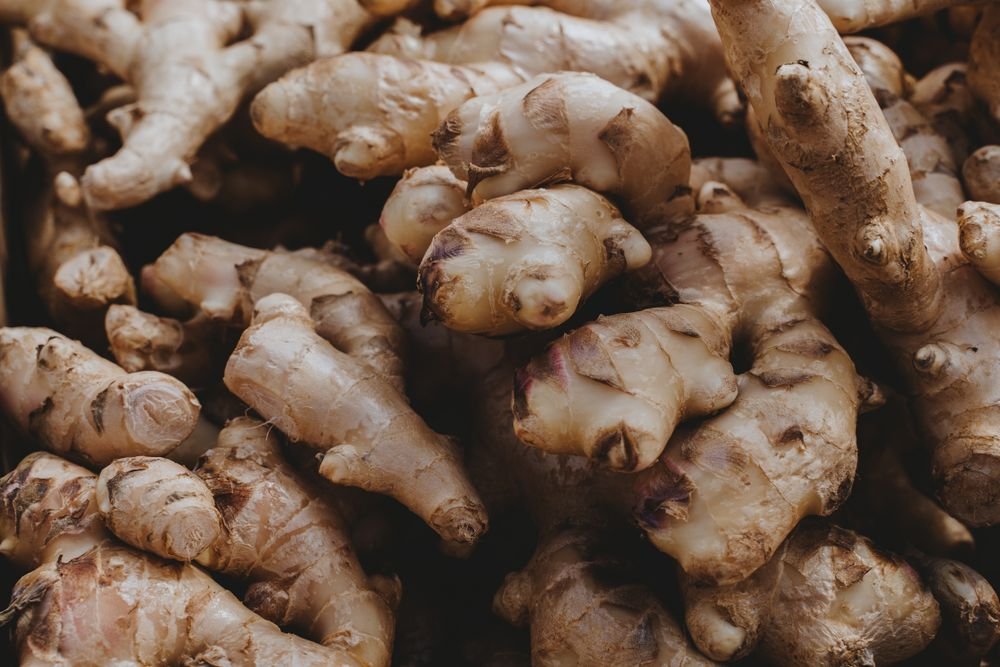

Ginger has quietly become one of the most expensive items on the spice shelf. In Lagos, a small piece now costs around ₦1,000. In Ghana, traders are flying in ginger from China and the Netherlands just to keep shelves stocked. If you’ve noticed ginger prices climbing at your local market or supplier, you’re not imagining it.
This article breaks down why ginger is scarce right now, which countries are most affected, what’s driving prices up, and what the near-term outlook looks like for businesses and consumers.
What Is Actually Happening With Ginger Right Now
Ginger prices have hit record or near-record highs across multiple markets in 2025 and 2026, particularly in West Africa. In Lagos, traders report a paint bucket of ginger selling for up to ₦46,000. A small piece costs around ₦1,000 in Surulere, according to June 2026 reporting from Nairametrics.
This is not a total collapse of supply. Ginger is still available in most markets, but the reduction in volume is significant enough to push prices well beyond what most households or small food businesses can comfortably absorb.
Both fresh and processed ginger are affected. In China, a shortage period reportedly caused 80% of local ginger processing plants to shut down, according to Produce Report. That reduced the flow of dried, powdered, and preserved ginger products to international buyers at a critical time.
The Causes Are Multiple — Disease, Insecurity, and Weather
There is no single reason for this shortage. Several problems have hit at once, and they reinforce each other.
A Ginger Disease in Ghana
Ghana has been dealing with what its deputy agriculture minister described as a “strange ginger disease” for more than two years. It has devastated farms and cut yields sharply. Ghana, which previously grew enough ginger to supply its own needs, is now importing from China, Côte d’Ivoire, Nigeria, Togo, Sri Lanka, India, and the Netherlands just to fill the gap.
That import dependence adds cost at every step — purchase price, shipping, and local distribution. All of it flows down to the consumer.
Insecurity in Nigeria’s Producing Regions
Nigeria is a major ginger producer, but key growing states have been hit by insecurity. This disrupts planting, harvesting, and transport. Traders cite these security issues as a central cause of the supply crunch.
In southern Kaduna, a trade-focused podcast reported ginger prices at around ₦210,000 per bag for dried ginger, with fresh ginger reaching ₦500,000 to ₦510,000 per bag. Those are extraordinary figures that reflect how tight supply has become at the source.
Weather and Planting Cuts in India
India is the world’s largest ginger producer, with output of approximately 2.33 million tonnes in 2024. But according to a February 2026 market update from Nedspice, India’s 2026 production is expected to decline due to adverse weather and reduced planting area.
When the world’s biggest supplier produces less, the pressure on every other source increases. Combined with Ghana’s disease problem and Nigeria’s security issues, this creates a global tightening of supply that markets are now pricing in.
How This Plays Out for Farmers, Traders, and Buyers
Each link in the ginger supply chain is feeling this differently, and not everyone has good options.
Farmers Face a Difficult Bet
If your last crop was hit by blight, do you replant and risk losing again? Many farmers in Ghana and affected parts of Nigeria have pulled back on ginger acreage. That’s a rational response to risk, but it deepens the shortage going forward.
Without real investment in disease-resistant varieties and better plant health support, this cycle is likely to repeat. Economists in Ghana have pointed to structural weaknesses in the sector — limited disease control infrastructure, poor post-harvest management, and low climate resilience — as root causes that won’t fix themselves.
Traders Absorb and Pass On Costs
Traders are sourcing from more distant and expensive suppliers to keep supply moving. Importing from the Netherlands or Sri Lanka carries costs that domestic sourcing never did. Those costs don’t disappear — they get added to the price buyers pay downstream.
Transport costs within producing regions are also elevated, particularly in Nigeria where insecurity limits movement. Every extra cost in the chain adds to the final shelf price.
Food Businesses Are Squeezed
Street vendors, restaurants, and spice retailers are caught between rising input costs and customers who can’t or won’t pay more. A waakye vendor in Accra who previously bought ginger cheaply now faces a much higher cost for the same amount.
Some packaged goods brands have responded with what commentators are calling “ginger shrinkflation” — smaller package sizes at the same or higher prices. It’s the same pattern seen with other commodities under cost pressure: the quantity shrinks while the price holds or increases.
Where Global Supply Stands — Asia-Pacific, China, and India
To understand the scale of the problem, it helps to know where ginger comes from globally. Asia-Pacific accounts for roughly 43% of global ginger production. India leads with approximately 2.33 million tonnes produced in 2024, according to MarkNtel Advisors.
China had a difficult shortage period but has partially recovered. The problem is that its processing capacity was badly damaged during the scarcity phase — with 80% of processing plants reportedly shut — so even as raw production recovers, the capacity to convert that into exported processed ginger has been reduced.
India’s expected production decline in 2026 means that just as China is trying to recover, the other major supplier is pulling back. Buyers who might shift sourcing from India to China face their own challenges around logistics and competition for limited Chinese supply.
Global demand is also rising, not falling. The global ginger market was estimated at USD 4.39 billion in 2025 and is projected to reach USD 4.80 billion in 2026, according to MarkNtel Advisors. Growing use in food and beverage, pharmaceuticals, and wellness products is expanding demand even as supply tightens. That gap is what keeps prices elevated.
How Long Will This Last?
The honest answer is that the near-term outlook is cautious. A February 2026 market update from Nedspice described industry sentiment for 2026 as cautious, with future conditions depending on logistics, Chinese competition, and how supply volumes balance against demand.
Some social media commentary has suggested a global shortage lasting five more years. That claim is not backed by detailed analysis from agricultural bodies or trade institutions, so it should be treated as opinion rather than a verified forecast. But the underlying logic — rising demand meeting structurally weakened supply — is real and not easily reversed.
What would need to change for prices to ease? Farmers in Ghana would need to recover production, which requires effective disease management programs. Nigeria would need improved security in producing regions. India would need favorable weather and farmers willing to plant more. And global processing capacity, particularly in China, would need to return to full operation. None of that happens quickly.
For businesses that use ginger regularly, waiting for prices to return to 2023 levels may not be a viable strategy. Planning around current price levels — or building flexibility into procurement and recipes — is more practical than hoping for a fast correction.
What Businesses and Consumers Can Do Now
If you run a food business or source ginger commercially, a few practical adjustments can reduce exposure to this shortage.
- Review your sourcing options. If you’ve been relying on a single supplier or region, explore alternatives. Dried or powdered ginger from different origins may offer more stable pricing than fresh ginger right now.
- Look at recipe flexibility. Spices like turmeric and galangal share some flavor characteristics with ginger. Using blends rather than pure ginger can reduce your per-dish cost without significantly changing the product.
- Be transparent with customers. If prices genuinely require a menu or product price adjustment, explaining the commodity situation is more credible than unexplained increases or silent portion reductions.
- Watch India’s 2026 harvest closely. If the production decline is less severe than projected, or if China’s export capacity normalizes, prices could ease. But don’t price future contracts on that assumption yet.
For more practical business and market analysis, BusinessSling covers supply chain, pricing trends, and sector news that matter to entrepreneurs and managers.
The Bottom Line
The ginger shortage in 2025–2026 is real, but it’s not a single-cause crisis. Disease in Ghana, insecurity in Nigeria, weather pressure on India’s harvest, and reduced processing capacity in China have all combined to tighten supply at the same time that global demand is growing.
Prices are high and are likely to stay elevated in the near term. The structural issues — disease management gaps, logistics vulnerabilities, and insecurity in producing regions — won’t be fixed by a good season alone. Businesses that depend on ginger should treat current prices as the new baseline until there is clear evidence of a sustained supply recovery.
Read Also: